Mastering wavetable synthesizer techniques opens up possibilities that most producers overlook entirely. While the focus tends to land on melodies, drums, and basslines, pads are often what separate a track that sounds finished from one that sounds professional. Rich, evolving atmospheric pads create the emotional undertone that guides the listener and learning to build them through wavetable sound design is one of the highest-leverage skills a producer can develop.
Pads are the invisible glue that holds a track together. Without them, even the strongest melodies and drums can feel hollow or emotionally flat. Mastering this layer of your production gives your music a depth that listeners feel before they consciously understand why they keep replaying it.

Your Craft Is the Foundation of Your Business
There’s a version of producer culture that treats technical skill as secondary hustle the placements, grow the social following, market the brand. And while none of those things are wrong, they tend to collapse quickly when the music underneath them isn’t built on genuine craft.
The producer who understands sound design at a deep level has something that marketing cannot manufacture: a voice. A sonic identity that listeners recognize before they see a name. That identity is not accidental. It’s built beat by beat, session by session, through the kind of intentional experimentation that most producers skip because it doesn’t feel immediately productive.
Atmospheric pads are one of the clearest expressions of that identity. They’re not the loudest element in a track, but they’re often the most revealing. The space you create or refuse to create in a production tells a story about your creative philosophy. Producers who understand pads understand texture, restraint, and emotional architecture. Those are the qualities that make a producer irreplaceable to an artist rather than interchangeable with the next beat on a marketplace.
This isn’t about spending infinite hours on sound design at the expense of releasing music. It’s about understanding that the technical depth you build now compounds over every future project. A producer who genuinely knows how to design a pad from scratch who understands the relationship between modulation and emotion brings something to a session that a preset-reliant producer simply cannot. That’s a business advantage, not just a creative one.
The skills covered in this post aren’t separate from building a sustainable music business. They are the foundation of it.
Why Wavetable Synthesizer Techniques Matter for Atmospheric Pads
The beauty of atmospheric pads lies in their subtle complexity. Unlike basic subtractive synthesis, wavetable sound design gives you access to a wide range of harmonic content from the start allowing you to create textures that shift and evolve over time. The ability to scan through wavetables, apply modulation, and blend multiple oscillators enables producers to craft pads that genuinely feel alive. The key is balancing movement with smoothness: the pad should fill space without competing for attention.
The wide array of wavetable options allows you to tailor your pads for any genre or vibe. Whether you’re crafting lush ambient backgrounds or darker cinematic moods, wavetable synthesizer techniques allow you to sculpt harmonic layers that stay interesting throughout long sections of a song. The evolving nature of atmospheric pads ensures your track never feels static or repetitive.
Starting Your Atmospheric Pad Sound with Wavetable Synthesizer Techniques
Begin by selecting a wavetable that offers interesting harmonic content. Modern synthesizers provide hundreds of unique waveforms to explore. Modulating the wavetable position introduces subtle movement that shimmering, evolving character that defines the best atmospheric pads. Your initial waveform selection and scanning approach set the foundation for everything that follows.
Even the smallest movement through the wavetable changes how a pad breathes within a mix. Take time to listen carefully to the way harmonics open and close as you modulate. The goal is continuous evolution that never becomes distracting consistency and variety existing in the same sound simultaneously.
Adding Depth and Dimension to Your Atmospheric Pads
After laying down the core sound using wavetable synthesizer techniques, it’s time to add depth. Start by introducing multiple oscillators slightly detuned from each other. This creates natural chorusing and width. Layering additional wavetables can also expand the sonic palette, allowing you to blend warm analog-like tones with digital clarity. Envelopes play a critical role here; slow attack times ensure that the pad swells into the mix smoothly, while longer release times allow the sound to fade naturally. With wavetable synthesizer sound design, modulation sources like LFOs can create evolving filter sweeps, subtle pitch modulation, and stereo movement, making your atmospheric pads feel alive and organic.
Depth can also be achieved by layering complementary textures together. Try combining warm foundational tones with airy, high-frequency components that shimmer and sparkle. Use careful panning to spread these elements across the stereo field. This layered approach ensures your atmospheric pads sound wide and full surrounding the listener in an immersive soundscape that reflects genuine creative intentionality. That same intentionality is what separates producers who build sustainable careers through their craft from those who rely on volume alone.
Shaping Space with Effects in Wavetable Synthesizer Sound Design
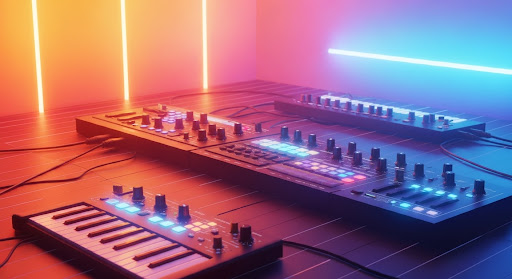
To truly elevate your atmospheric pads, effects are essential. Reverb adds space and dimension, turning a simple pad into a lush soundscape. Delays can create rhythmic echoes that add motion without cluttering the mix. Modulation effects like chorus and phaser introduce subtle fluctuations that make the pad feel rich and deep. When applying these effects with wavetable synthesizer techniques, subtlety is key. You want the pad to support the track, not dominate it. The goal is to craft a sonic bed that allows other elements of your composition to shine while still providing emotional impact.
Automation can bring your effects to life. Slowly modulating reverb size or delay feedback over time can add a cinematic feel to your atmospheric pads. Combining multiple effect layers with careful automation allows you to sculpt ever-changing textures that evolve alongside your track, a hallmark of advanced wavetable synthesizer sound design.
Your Own Style with Wavetable Synthesizer Techniques
Tutorials give you the framework experimentation is where your actual sound gets built. Every synthesizer offers different capabilities: custom wavetable creation, complex modulation matrices, granular synthesis, sample import, resampling. The producers who develop a signature pad sound aren’t the ones who followed every tutorial correctly. They’re the ones who stayed in the experiment long enough to discover what no one else was doing.
As you experiment, keep detailed notes and save every custom patch you build. Over time, these experiments become your personal sound library the beginning of a catalog that reflects your specific creative identity. That catalog, and the long-term relationships you build with artists who recognize your sound, are what turn a skill into a business. When you revisit your saved atmospheric pads, you’ll discover new uses and layering ideas, expanding your creative toolbox. This ongoing exploration is the true art of wavetable synthesizer sound design, constantly pushing your sound to new levels.
Frequently Asked Questions
What synthesizer should I use to start building atmospheric pads?
The short answer is: the one you already have. Reason Studios Europa Spectral Wavetable Synth is our personal best overall, Grain Sample is great for textures, Thor Polysonic Synthesizer is extremely versatile, Vital (free), Massive X, and Ableton’s Wavetable are all excellent starting points for wavetable sound design. The differences between them matter far less than your depth of understanding within any single one of them. Spend six months going deep on one synthesizer before adding another. Producers who know one instrument thoroughly consistently outperform those who know five instruments superficially. The pad sounds you’re chasing are not locked behind a specific tool they’re unlocked by understanding modulation, envelope behavior, and layering principles that apply across all wavetable synthesizers.
How do I keep atmospheric pads from muddying my mix?
The most common culprit is low-end buildup. Use a high-pass filter to roll off frequencies below 200–300 Hz on your pads this clears space for your kick, bass, and low-mid elements without sacrificing the pad’s emotional presence. The second issue is competing with the mid-range, particularly vocals and leads. Careful EQ carving in the 800 Hz–2 kHz range creates room for the pad to sit behind the focal elements while still contributing warmth and depth. Think of your pad as the room, not the furniture it should define the space, not occupy it.
How long does it take to develop a signature pad sound?
Longer than most producers expect, and faster than they fear if they’re intentional about it. The producers who develop recognizable pad signatures are not necessarily the most technically gifted. They’re the ones who stayed in experimentation consistently enough to accumulate hundreds of decisions about what works for their sound. A reasonable expectation is 6–12 months of deliberate practice saving patches, revisiting them, understanding why certain combinations work before a genuine signature begins to emerge. The process cannot be rushed, but it can be structured. Intentionality always shortens the learning curve.
Final Thoughts: Your Sound Design Is Your Signature
Mastering wavetable sound design for atmospheric pads is one of the most powerful ways to add depth, emotion, and professionalism to your tracks. The skills covered here wavetable scanning, modulation routing, layering, effects processing are not destinations. They’re tools that continue to evolve with you across every production season.
But beyond the technical here is what is actually true: the producers who commit to deep craft are the ones who don’t have to explain themselves. They don’t need to talk about how good their beats are because the sound speaks clearly enough to do it for them. In a marketplace full of producers using the same samples and the same presets, genuine technical depth is not just artistically satisfying. It’s a competitive advantage that no algorithm update can take from you.
Build the skill. Own the sound. The business follows from there. Whether you’re producing ambient, electronic, hip hop, or cinematic music, well-crafted atmospheric pads can transform your productions into immersive sonic experiences. And for producers navigating the business side of building that identity, understanding how to develop your artist sound from a producer perspective is the natural next step.
Sound design skills build slowly. Clarity about what you’re building toward should come first.
One of the most common patterns in independent producers is deep technical investment running parallel to complete business confusion incredible craft with no clear direction for how it generates income, grows an audience, or creates stability. The Emergency Kit was built specifically for that moment: when the talent is real but the structure around it is missing.
If the creative side feels solid but everything else feels scattered, that’s where to start.
→ Emergency Kit: Reset Your Music Business in 7 Days
Justin David
Creative man • Philosopher • Artist • Producer